

Imagine rolling out of bed to 70-degree breezes and palm-filtered salt air instead of scraping ice from a windshield. That fantasy draws thousands south each year: Palm Beach County’s population topped 1.58 million in 2024 (U.S. Census Bureau). We come for 47 miles of beaches, endless sunshine, and Florida’s zero state income or estate tax. Yet summer heat, rising insurance costs, and picking the right community can turn excitement into overwhelm. This guide solves that. You’ll know when to move, how to vet 55+ communities, what to budget, and where to grab the freshest grouper sandwich.
Sunshine and climate: heavenly winters, honest summers
Palm Beach County enjoys about 238 sunny days each year, according to local real-estate analysts. Winter highs hover near 77 °F (25 °C); you can swap snow boots for sandals and keep them on through February.
The trade-off arrives in late June. Daytime readings climb into the 90s °F (32–35 °C), humidity hangs heavy, and afternoon thunderstorms pop up with near-daily regularity. Locals adapt by running errands early, staying cool indoors after lunch, then catching a sea breeze once showers pass.
Hurricane season overlaps summer, yet preparation and updated building codes keep risk in check. Impact-rated windows, neighborhood shelter plans, and a stocked storm kit turn anxiety into routine readiness.
Bottom line: you enjoy about eight months of postcard weather and four months that reward early tee times and reliable sunscreen. Most retirees call that a fair trade.
Tax benefits: keep more of every retirement dollar
Florida’s tax climate lives up to the hype. The state collects no income tax, so your Social Security, pension, and IRA money arrive whole. There is also no estate or inheritance tax, easing multigenerational planning, reports the 55places retirement website.
Property taxes remain moderate by national standards. Most owners pay about 1.1–1.3 percent of assessed value each year, according to regional real-estate studies, compared with more than 2 percent in states like New Jersey or Illinois.
Year-round residents can claim the Homestead Exemption, trimming up to $50,000 from taxable value and capping future assessment increases at three percent under the Save Our Homes rule. Homeowners aged 65 and older with limited incomes gain an extra senior exemption for even deeper savings.
Bottom line: many retirees save thousands each year versus high-tax northern states, freeing cash for new golf clubs, a weekend cruise, or flights to see the grandkids.
Cost of living: value hides in the details
Home prices can jolt first-time browsers, yet Palm Beach County still sits between high-priced coastal cities and sleepy budget towns. Sprawling across territory larger than Rhode Island, today’s Palm Beach real estate listings range from $200,000 inland condos to eight-figure ocean estates, so virtually every budget finds a foothold.
Overall expenses run about 14 percent above the national average—similar to Phoenix and far below Boston or Los Angeles—per market-research firm CENEGE.
Housing sets the tone. Single-family homes cluster in the mid-$500 Ks, condos start near $200 K, and many 55-plus communities open below $150 K. A quick scan of current Palm Beach listings shows where your budget fits.
Prices shift weekly, so a dashboard that pulls data straight from the MLS keeps your numbers honest. The searchable www.squarefoothomes.com/real-estate/ portal refreshes every 15 minutes, and its “55 Plus Communities” and “No HOA Homes” filters let you compare HOA costs, or avoid them entirely, before booking a showing.
Plan for insurance early. Even after state reforms, homeowners spend roughly three times the U.S. norm because carriers price for hurricanes. Wind-mitigation features and newer roofs trim premiums, and inland flood policies often cost only a few hundred dollars per year.
Everyday life steadies the ledger. No winter heating, no state income tax, and senior discounts on golf, Brightline trains, and more keep monthly spending predictable. Many newcomers find their net outflow changes little—or even dips—once Florida habits kick in.
Lifestyle and activities: sun-up fun to star-lit culture
Palm Beach County squeezes more variety into one coastline than some states manage border to border. Early risers reach the sand by 7 a.m., strolling 47 miles of shoreline while pelicans glide overhead. Golfers tee off next; the county hosts more than 160 courses that offer a fresh layout every week without leaving home turf, according to the Palm Beach County Sports Commission.
Away from fairways, pickleball echoes across newly painted courts, fishing charters idle at inlets, and kayakers weave through mangrove tunnels at Okeeheelee Park. After sunset, West Palm’s Kravis Center fills with touring Broadway shows, Delray’s Atlantic Avenue hums with live music, and Jupiter’s lighthouse casts its timeless glow while diners linger over fresh grouper.

Few of these pleasures require a learning curve. Whether you are scouting for the right bridge club or curious about paddleboarding, clubs, classes, and meet-ups stand ready. Join once and the social calendar begins to write itself.
6-plus months out: research and budgeting
Six months feels generous until the task list grows. Begin with a clear money picture. Add projected sale proceeds from your current home, subtract target purchase or rental costs in Palm Beach County, then set aside funds for movers, closing fees, and a year of Florida-level homeowners insurance. Build the cushion now so later surprises shrink to minor bumps.
Next, scout neighborhoods in every season. A winter visit sells most newcomers, yet a quick July trip shows the warm-weather reality. If travel is tough, arrange live video walk-throughs with a local agent and browse community Facebook groups for unfiltered chatter.
Finally, trim possessions. Walk each room with three boxes (keep, donate, sell) and be ruthless. Movers charge by weight, Florida closets run smaller than northern basements, and you will thank yourself when unpacking finishes in one afternoon.
3–5 months out: home hunting and commitments
Research shifts to plane tickets and offers. Schedule a long weekend, line up showings, and treat the trip like speed dating: mornings for condos, afternoons for single-family homes, evenings for neighborhood dinners to test the after-dark vibe. Keep notes; coastal towns blur together after the fourth stop.
If you plan to finance, secure pre-approval before landing in Florida. Sellers lean toward offers with paperwork ready, and insurance quotes hinge on the address you choose. Touring a 55-plus community? Ask for a day pass. A couple of hours at the clubhouse bar teaches more than any brochure.
Renters follow the same drill: apply early, expect credit checks, and read HOA rules. Some associations cap rentals per year or ban pets over thirty pounds. Better to learn that with coffee in hand than after the truck arrives.
1–2 months out: locking logistics
Your closing date is set; the countdown quickens. Book a licensed, insured mover right away; snowbird season empties truck calendars weeks ahead. Confirm weight estimates in writing and buy replacement-value coverage for heirlooms you refuse to lose.
Call utility providers next. Florida Power & Light, municipal water, internet, and trash services start smoothly when given at least two weeks’ notice. Schedule activation for move-in morning so you are not unpacking by flashlight.
Handle paperwork now. File a change of address with USPS, move prescriptions to a local pharmacy, and gather documents for the Florida DMV: passport or birth certificate, Social Security card, and two proofs of your new address. You have thirty days after arrival to secure that sun-themed license plate, so beat both the clock and the line.
Moving day and arrival: from keys to breeze
Arrive before the truck if possible. A quick sweep lets you note any dings before furniture hides them, and an air mattress plus coffee maker turns an empty house into livable space within minutes.
When the trailer doors open, hand movers a simple floor plan. Boxes land in the right rooms, traffic flows smoothly, and assembly wraps up before the afternoon thunderstorm rumbles through. Offer cold water; Florida heat humbles even seasoned crews.
After the last signature, step outside, inhale ocean air, and watch the sun settle behind the royal palms. This is the moment earned through spreadsheets, showings, and cardboard cuts. Savor it.
Finding your ideal spot in Palm Beach County
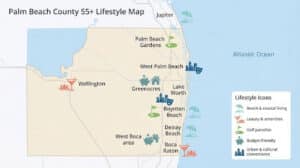
Beach and coastal living
If daily seaside walks lead your wish list, focus on Delray Beach and Jupiter.
Delray mixes small-town charm with a lively core. Atlantic Avenue runs to the sand and is lined with open-air cafés where sandals count as dress shoes. Choose an east-of-I-95 condo for out-the-door beach access, or slip into Kings Point, a 55-plus enclave a few miles inland. Condo prices often start under $150 K, yet residents share two clubhouses, multiple pools, and a packed events calendar.
Farther north, Jupiter trades nightlife buzz for laid-back energy. The lighthouse guards turquoise water, paddleboarders glide along the Loxahatchee River, and seafood shacks serve lunch on paper trays. Waterfront condos cluster near Carlin Park, while single-story villas west of U.S. 1 keep insurance bills tame and still place you ten minutes from sunset on the sand. For real value, older 55-plus complexes such as Colonial Club in nearby Boynton Beach hug the Intracoastal Waterway and sell in the mid-$100s.
Both towns deliver soft sand, strong community spirit, and a year-round vacation vibe. The choice comes down to tempo: Delray’s artsy bustle or Jupiter’s calm.
Luxury and amenities
If retirement means valet parking, designer boutiques, and spa days that end with sunset cocktails, head to Boca Raton or Wellington.
Boca sets the gold standard. Mizner-style architecture frames palm-lined streets where art galleries share sidewalks with steak houses. Nearby, gated 55-plus sanctuaries from GL Homes’ Valencia series provide country-club polish without mandatory golf dues. Expect on-site restaurants, grand clubhouses, pickleball leagues, and single-family homes starting in the high $500 Ks.
Prefer horses to haute couture? Wellington’s manicured bridle paths and winter polo scene put you ringside for world-class sport. Communities such as Buena Vida wrap luxury homes around lakes and resort pools, offering a quieter rhythm just fifteen minutes from Whole Foods and top-tier medical centers.
Either locale swaps basic retirement for a year-round resort pass.
Golf paradise
Palm Beach County lives golf. The PGA once called Palm Beach Gardens home, and more than 160 public and private layouts snake from coast to Everglades.
Boynton Beach layers championship courses over affordable real estate. Indian Spring pairs two 18-hole tracks with optional memberships, letting you choose pay-as-you-play freedom or full club privileges. Villas and single-family homes start in the mid-$300 Ks. After sundown, card rooms and dinner dances keep the clubhouse buzzing.
Up the road, Palm Beach Gardens combines golf with luxury shopping at The Gardens Mall. PGA National welcomes all ages yet attracts many 55-plus players thanks to five storied courses and a spa. Prefer an age-restricted option? Poinciana in Lake Worth offers its own executive course and condos in the lower $200 Ks, proof that daily tee times do not demand Wall Street bonuses.
Budget-friendly and laid-back
If country-club fees or oceanfront premiums feel extravagant, move a few miles inland.
Greenacres and Lake Worth string together low-rise condos and cozy villas where HOAs handle exterior upkeep, pool care, and even cable. Whisper Walk in west Boca runs under $250 K for a two-bed villa, complete with tennis courts, walking trails, and a clubhouse filled with movie nights and quilting circles.
Closer to downtown life, The Pines of Delray keeps monthly fees modest while placing you ten minutes from Atlantic Avenue restaurants. Buildings rise just two stories, elevators are scarce, and neighbors greet one another by first name before week two.
These communities prove you do not need a seven-figure portfolio for Florida fun.
Urban and cultural convenience
Some retirees want coffee shops downstairs, theater tickets on a whim, and water views from the twelfth floor. Downtown West Palm Beach delivers those perks without sacrificing beach access.
Condos along Flagler Drive look over sailboats on the Intracoastal and sit two blocks from Clematis Street’s farmers market, art fairs, and late-night jazz. A quick Brightline ride reaches Miami or Orlando, and Palm Beach International Airport sits ten minutes away.
Building amenities replace clubhouse dues: rooftop pools, fitness centers, and concierge desks that sign for packages. Social circles form at monthly wine tastings, and age ranges span thirty-something remote workers to active seventy-somethings who walk everywhere.
Prefer single-story living yet want city access? The 55-plus community Leisureville in Boynton Beach offers modest homes, a par-three golf course, and free shuttles, all within a quick drive of cultural hubs.
Choose the skyline path and your car keys may spend more time in a drawer, traded for sneakers and train tickets.
Healthcare, insurance and safety nets for retirees
Healthcare access
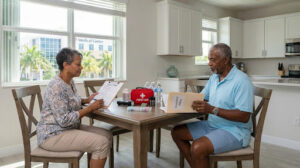
Palm Beach County supports healthy longevity with 16 hospitals spread from Jupiter Medical Center in the north to Delray Medical Center in the south, according to the Business Development Board of Palm Beach County. Each anchors clusters of specialists, imaging suites, and rehab centers, so most residents drive fewer than 20 minutes for routine care.
Large systems keep adding physicians to meet senior demand, and concierge primary-care groups offer same-day visits for an annual fee. Veterans gain extra support through the 153-bed VA Medical Center in West Palm Beach. Snowbird season can crowd waiting rooms, so book electives for summer and keep an urgent-care clinic in your contacts for weekend mishaps. Robust online portals make it easy to transfer records before the moving truck leaves your old driveway.
Bottom line: the county pairs resort living with big-city medicine, letting you play with confidence that help stays close.
Insurance and storm prep
Florida sunshine comes with fine print. The average homeowners premium in the state reached about $7,100 on a $300,000 home in 2025, roughly 180 percent above the national average, estimates Insurance.com. Newer construction with impact glass, fortified roofs, and wind-mitigation reports can trim costs by 20 percent or more.
Add flood insurance even if the lender does not require it; the typical Florida National Flood Insurance Program policy cost about $865 a year in 2025, according to Bankrate. Inland homes often sit lower on the risk scale, keeping premiums modest compared with coastal zones. Check FEMA’s 2024 map update to confirm your property’s status.
Preparation outperforms panic once hurricane season starts on June 1. Stock a week of water, shelf-stable food, prescriptions, and pet supplies. Most 55-plus communities host annual readiness seminars and maintain neighbor check-in lists, so you are never planning alone. If officials order an evacuation, leave early on Florida’s Turnpike; hotels fill quickly and traffic doubles by the hour.
Follow these steps and storm season becomes one more date on the calendar, not a deal-breaker. The reward is enjoying the other ten months under clear skies with policies in hand and shutters ready.
Getting around: cars, rails and everything in between
Palm Beach life runs on choice, not obligation. Most retirees hang onto a car because groceries, doctor visits, and beach chairs load more easily into a trunk than onto a bus seat. Traffic seldom matches Miami gridlock; plan around school rush and you can cruise US-1 from door to sand in about 20 minutes.
For farther-flung family trips, Palm Beach International Airport sits roughly 3 miles—about 10 minutes—from downtown West Palm Beach, per Google travel data. Nonstop flights reach New York, Atlanta, and Dallas before lunch. If you want more route options, Fort Lauderdale and Miami airports extend nonstop reach without the sprawl of mega-hubs like JFK.
Prefer rail to roads? Brightline now links West Palm to Fort Lauderdale, Miami, Boca Raton, and Orlando with reclining seats, Wi-Fi, and discounted passes for frequent riders, the company reports. Tri-Rail offers a budget-friendly backup, while Palm Tran buses give half-fare rides to anyone 65 or older. Many 55-plus communities add private shuttles for grocery runs, medical visits, or Friday happy hour, so check the amenity list before you buy.

Walkability shifts block by block. Downtown West Palm, Delray’s Pineapple Grove, and Abacoa in Jupiter invite sneakers, not steering wheels. Suburban neighborhoods lean on golf carts; you will spot retirees zipping to pickleball courts without using a drop of unleaded.
Bottom line: choose four wheels, two wheels, or none at all, and Palm Beach County still keeps you moving under bright skies.