
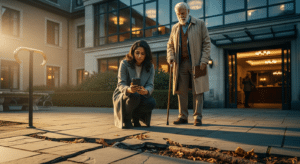
For many caregivers, ensuring a loved one’s safety extends far beyond the front door of their home. A simple trip to the grocery store, a visit to a community center, or a walk in the park can present unexpected risks, turning a pleasant outing into a source of anxiety. While we cannot control every environment, developing an observant habit for potential dangers allows us to act before an accident occurs.
Proactive awareness is a caregiver’s most powerful tool in preventing falls and injuries among older adults. This guide provides a clear, actionable framework for identifying common public dangers, details the proper steps to report hazards for seniors to property management, and explains the options available if a preventable accident happens. By taking these steps, you help ensure that public spaces remain accessible and secure for your loved one and the entire community.
Recognizing Hidden Dangers: Common Hazards for Seniors in Public Spaces
Developing a habit of scanning environments for risks is the first step in prevention. This is not about living in fear, but rather about empowerment through observation. Understanding where accidents are most likely to happen allows you to steer your loved one away from danger or address the issue with the property owner.
Beyond Wet Floors: Common Slip and Trip Hazards
While “wet floor” signs are a familiar sight, many fall hazards are far less obvious until it is too late. Uneven or cracked pavement, potholes in parking lots, torn carpeting in public lobbies, and unsecured electrical cords stretching across walkways are frequent culprits. Studies indicate that outdoor falls during winter frequently occur in parking lots and on sidewalks, making these areas high-priority zones for caregivers to observe. These irregularities in the walking surface can be particularly dangerous for seniors who may have a shuffling gait or use a walker.
The consequences of these hazards are significant and underscore the need for vigilance. According to the CDC, falls are the leading cause of injury-related death for adults aged 65 and older, resulting in tens of thousands of deaths annually. Furthermore, more than one in four older adults reports falling each year. Identifying a loose tile or a jagged piece of concrete is a critical step in reducing these statistics.
Poor Visibility and Inadequate Maintenance
Environmental conditions often contribute to accidents just as much as physical obstacles do. Dim or burnt-out lighting in stairwells, hallways, and parking garages makes it difficult for seniors with diminishing eyesight to navigate safely. Similarly, broken or missing handrails on stairs and ramps remove a necessary support system for those with limited balance. Cluttered aisles in retail stores or debris left in common areas of residential buildings also pose serious risks.
These issues are often symptomatic of broader management neglect. Recent inspections by state health departments and news investigations have highlighted systemic safety failures in senior housing and HUD-subsidized developments, where residents have reported broken security locks, non-functioning emergency pull-cords, and a lack of basic lighting.
Consistent neglect is more than just an eyesore; it is a “red flag” that a property manager is likely disregarding OSHA or Life Safety Code protocols. When maintenance is deferred, the risk of a life-altering fall for a senior increases exponentially.
Weather-Related and Environmental Risks
Seasonal changes bring specific hazards that require extra attention, particularly in regions prone to cold weather. Property owners have a responsibility to manage ice and snow on walkways, as these create immediate slip risks. However, inconsistent clearing or salting is common. Environmental factors like pooled water after rainstorms or piles of wet fallen leaves can also create dangerously slippery surfaces that mimic ice.
Climate patterns are increasingly influencing safety; fluctuating temperatures and icy conditions have been linked to an increase in falls in some urban areas. Just as you would check the weather before planning an outing, scanning the ground for these weather-related hazards upon arrival is essential. If a business or apartment complex fails to clear a safe path, it constitutes a reportable safety hazard.
From Observation to Action: A Step-by-Step Guide to Reporting Safety Hazards
Once you have identified a danger, the next step is to report it effectively. Simply mentioning it to an employee in passing is often not enough to ensure the problem is fixed. A methodical approach ensures the issue is taken seriously and creates a record of your notification.
The First Step: How to Document a Hazard
Clear documentation is the most critical part of the reporting process. It provides proof that the hazard exists and establishes a timeline. Before leaving the area, take the following steps:
- Take Clear Photos and Videos: Capture the hazard from multiple angles. Take a wide shot to show the hazard’s location relative to landmarks (like a store entrance) and a close-up to show the specific defect. If possible, place a common object like a coin or key near the defect to provide scale.
- Note the Exact Location: Write down the specific address. If the hazard is inside, record the floor number, department, or aisle number. Precision helps maintenance teams find and fix the issue quickly.
- Record the Date and Time: Use your phone’s timestamp or make a manual note. This is vital for establishing how long a hazard was present if an accident occurs later.
- Write a Brief, Factual Description: Describe the hazard objectively in your notes. For example, write “Cracked sidewalk tile, approximately one-inch lift, in front of the main entrance” rather than “Dangerous sidewalk.”
Creating a Written Record: Who to Contact and How
Reporting the hazard to the correct authority is essential for prompt action. For a retail business, this is usually the store manager. For a residential complex, contact the property manager or landlord. For public sidewalks or parks, the local municipal public works department is the correct entity. While a verbal report is a good immediate step, following up in writing is necessary to create accountability.
Sending an email or filling out a formal incident report creates a timestamped record that is difficult to dispute later. If you speak to someone in person, follow up with an email summarized the conversation: “As we discussed this morning, I wanted to confirm my report regarding the broken handrail…” The table below outlines why written reports are superior for safety advocacy.
| Feature | Verbal Report (In-Person/Phone) | Written Report (Email) |
| Proof of Report | No official record unless you take notes. | Forms a permanent log with an associated timestamp. |
| Level of Detail | Can be misinterpreted or forgotten. | Allows for precise, detailed descriptions and photo attachments. |
| Accountability | Assigning accountability can be difficult. | Provides clear evidence that management was notified. |
| Legal Standing | Weak; “he said, she said.” | Strong; serves as concrete evidence of notification. |
| Best For | Alerting staff to an immediate, urgent danger. | Creating a legal record for non-urgent hazards and follow-up. |
When Warnings Are Ignored: Understanding Your Rights After a Fall
Despite a caregiver’s best efforts, property owners sometimes fail to address reported hazards, leading to preventable accidents. When a senior is injured due to negligence, it is important to understand the legal concepts that protect them and the steps to take to secure their future.
Premises Liability: The Duty of Care Owed by Property Owners
Premises liability is a legal concept that holds property and business owners responsible for maintaining a reasonably safe environment for visitors. This “duty of care” means owners must regularly inspect their property, repair known hazards, and warn visitors of potential dangers (such as using a “wet floor” sign). If an owner knows about a hazard—especially one that you or others have previously reported—and fails to fix it, they may be considered negligent if an injury occurs.
First Actions to Take After a Fall
If a fall does happen, the actions taken in the immediate aftermath are crucial for both the senior’s health and any future claim. Start by prioritizing these steps:
- Report the incident: Notify the property manager or person in charge immediately. Ensure an accident report is filed.
- Obtain medical attention: Have a doctor check your condition promptly, even when the injuries look minor. Adrenaline can mask pain, and a medical record links the injury directly to the fall.
- Document the scene: If you haven’t already, take photos of the hazard, the surrounding area, and visible injuries.
- Obtain witness details: Record the names and contact numbers of anyone who observed the fall.
- Limit communication: Do not admit fault or say “I’m fine” to insurance adjusters or property managers before seeing a doctor.
A fall can have lasting consequences beyond the initial injury. It can significantly impact a senior’s independence by affecting their ability to perform daily tasks, such as dressing, bathing, or preparing meals. Understanding this impact is vital when communicating the severity of the incident to medical and legal professionals.
Seeking Advice on Potential Legal Courses of Action
The financial and emotional toll of a fall is staggering. The annual medical costs for older adult falls are approximately $50 billion, a burden that often falls on families. While compensation cannot undo the accident, it can cover medical bills, rehabilitation costs, and pain and suffering.
Navigating the legal process after an injury can be complex, particularly when proving that a property owner was negligent. Understanding the specific evidence required and the procedural steps for filing a slip and fall claim is crucial for holding responsible parties accountable. Consulting with a legal team that specializes in premises liability can provide the expertise needed to investigate the incident, prove the owner had notice of the hazard, and secure the compensation your family deserves.
Just as you would evaluate the safety of a rideshare service before booking a trip—a topic covered in our guide on whether Uber is safe to use for seniors—it is vital to assess the safety of the public spaces your loved one frequents. Holding property owners to a high standard of safety is a community effort.
Your Commitment to Advocating for Safety
Protecting seniors in public spaces requires a combination of observation, methodical documentation, and an understanding of legal rights. By identifying hazards like uneven pavement or poor lighting and reporting them in writing, you create a safer environment for everyone. If accidents do happen, knowing how to document the incident and seek help ensures your loved one is not left to bear the burden alone.
By taking these proactive steps, you are not just protecting your loved one; you are contributing to a safer community for all older adults. Your diligence can prevent an accident before it happens, ensuring that public spaces remain accessible and secure for everyone. Discuss these safety strategies with your family and make a commitment to being an active observer on your next outing together.